%20(1).png?width=600&height=338&name=menu_thumbnail%20(4)%20(1).png)
%201.svg)


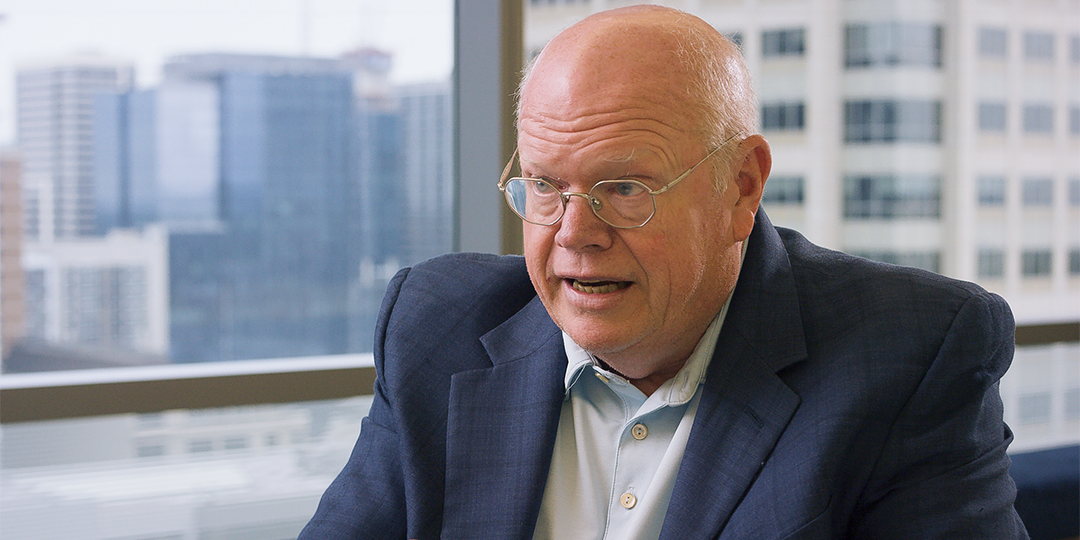
What do investors need to know before adding alternatives to their portfolios?
Key Takeaways
- Britt Harris, CIO & President of UTIMCO, one of the largest endowments in the US, has made a lot of money for his organization through alternative (and particularly private) investments.
- When making the transition to alternative investments, investors need to be aware that selecting a manager and getting access to them can make a huge difference in returns - much bigger than in public markets.
- All alternative investments have lockup periods and private assets have investments time horizons of 4-10 years so investors should make sure to have enough remaining liquidity to meet liabilities.
- Investors must be prepared for a different return profile. Private investments require fees/capital commitments up front which don't offer returns until later down the line - but these returns are higher than in public markets.
Transcript
I'm Britt Harris, I'm the CEO, CIO and president of UTIMCO. We manage 60 billion dollars and we are the second largest endowment in the country, but we manage additional money besides our endowment, [so] of all the people who do manage money [in the country], UTIMCO is the largest.
How do you go from not having any alternative investments to having a fully developed plan? So the first phase is just finding who you want to do business with, like which firms do I want to do business with? And if you look at the private markets, the total return on a long term basis should be a couple hundred basis points higher just in general. But the difference between the best performance and the worst performance is like 15 percent. And so, you know, you're getting that thing in the median, but you're spending your time [on picking managers]. This is where the network comes in and where you need people who can get access and know is it getting to the top twenty five percent? You know, the reward for that versus the risk that you're taking if you're getting about ten point five percent is so high that people want to spend their time. So you have to be willing to spend that time and and you need to understand it what you're getting yourself into.
And you've got to be survive the the down periods so you can get to the up periods. And the first thing is I got to make sure I'm liquid enough to sleep at night. You know, there's no amount of investment return is worth massive anxiety, you know, so you kind of if you're not sleeping at night, you've got too much to have a risk. Somebody needs to explain to you, you know, what's going on. The first part is going to be put money in the ground and you're going to be paying fees and it's not going to be producing returned. This is not the public markets where you buy something the next day, it goes up or down, you know, it's going to take three years, I say, just to kind of get the seeds planted in the field and, you know, and then 10 years before you get get something that's that's really healthy.
We made five hundred eighty two times our five hundred eighty times our money by funding this part of the country you're talking about. But it's also a place where you're going to have a lot of zeros as well. So it has to be a diversified structure. You have to have a long term time horizon. You have to you have to access the people who are really, really good at it. And I'm confident you will. You'll succeed.
Important disclosures
Opto Investment Management, LLC (the “Firm”) is a wholly-owned subsidiary of Opto Investments, Inc. and is an SEC-registered investment advisor. Registration with the SEC does not imply a certain level of skill or training. SEC registration does not mean the SEC has approved of the services of the investment adviser. This website is operated and maintained by Opto Investments, Inc. Certain products described herein and institutional relationships may involve investment advisory services provided by the Firm. This website is presented for financial institutions and investment professionals only and is not intended for individual consumers or retail investors, unless specifically noted. Unless otherwise indicated, commentary on this site reflects the personal opinions, viewpoints and analyses of the author and should not be regarded as a description of services provided by the Firm or its affiliates. The opinions expressed here are for general informational purposes only and are not intended to provide specific advice or recommendations for any individual on any security or advisory service. It is only intended to provide education about the financial industry. The views reflected in the commentary are subject to change at any time without notice. While all information presented, including from external, linked or independent sources, is believed to be reliable, we make no representation or warranty as to accuracy or completeness. We reserve the right to change any part of these materials without notice and assume no obligation to provide updates. Nothing on this site constitutes investment advice, performance data or a recommendation that any particular security, portfolio of securities, transaction or investment strategy is suitable for any specific person. We disclaim any responsibility for information, services or products found on linked websites. Images and photographs are included for the sole purpose of visually enhancing the website. None of them show current or former clients and should not be construed as an endorsement or testimonial. All investing is subject to risk, including loss of principal. Historical performance is not a guarantee of future performance and clients may experience different results. This information contains certain “forward-looking statements,” which may be identified by the use of such words as “believe,” “expect,” “anticipate,” “should,” “planned,” “estimated,” “potential” and other similar terms. Examples of forward-looking statements include, but are not limited to, estimates with respect to financial condition, results of operations, and success or lack of success of the depicted investment strategy. All are subject to various factors, including, but not limited to general and local economic conditions, changing levels of competition within certain industries and markets, changes in interest rates, changes in legislation or regulation, and other economic, competitive, governmental, regulatory and technological factors affecting operations that could cause actual results to differ materially from projected results. See related disclosures at https://www.optoinvest.com/disclaimers.