%20(1).png?width=600&height=338&name=menu_thumbnail%20(4)%20(1).png)
%201.svg)


JSoros, directly and via funds, invests across public and private assets to hit high growth targets.
Key Takeaways
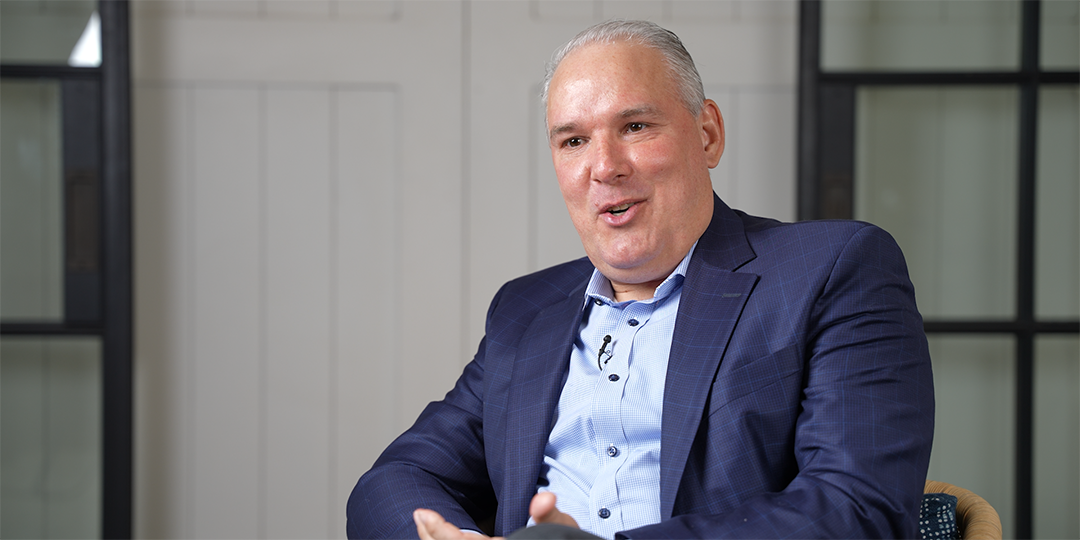
- Salil Seshadri, co-founder and CIO of JSoros Capital Management, discusses how his firm constructs a portfolio to reach their growth goals.
- JSoros doesn't target specific asset class allocations, but invests in good operating assets across public and private markets to drive high returns.
- Because returns have been higher in private markets, their portfolio today stands at about ~40% in private markets - predominantly in private equity and venture capital, which have had the highest absolute returns of any asset class (for top managers).
- They partner with outside groups in areas outside their core competency to help achieve the best returns across all investable assets.
Transcript
My name is Salil Seshadri, and I'm the chief investment officer of JS Capital, which is a firm that I started with my partner, Jonathan Soros, about ten years ago. We started with a pretty simple objective, which still holds true today, which is to compound our money at attractive rates of return and to be agnostic as to how we did it in terms of asset class or public versus private. We are quite discreet about the amount of capital we manage, but it is north of $5 billion of capital that we manage today.
Be my personal investment philosophy has been shaped by investing in operating assets. So at the core of how we operate, I believe in the power of owning operating businesses. What we don't have is a policy portfolio or a static asset allocation framework, largely because I don't believe in either of those two things.
There are clearly risks one takes when you invest in private markets that you don't take in public markets. In public markets you get liquidity. But even that isn't always what it seems. In other words, you may think you have liquidity, but it may not be as liquid as you think an asset is when you're looking to sell.
So we start with a framework that says at the end of the day, compounding at an absolute basis is what we want, but we aren't afraid to use cash if we need to. And since we started investing ten years ago, at JS Capital, I'd say on average we've had about 15 to 20% of our assets in cash.
I tend to get most interested and excited when we've done the work, done the diligence, and then the market gives you an opportunity to invest at attractive valuations. I've always believed that we needed to have internal resources to diligence assets.
At the core of what we do, we have, what I think is a terrific internal business focused on public equity investing. That same team works with me on everything we evaluate in private markets. I have always believed that understanding both markets is an advantage. Clearly, many people do it in the family office world. But then in addition to that, I've also felt like with our ability to be flexible, we should partner with great groups on the outside. I would say that on the private side, we have skewed more towards venture and growth equity than traditional private equity. But that isn't to say that that will always be the case.
We don't have static allocations, but the reality is that in private markets when we've made investments that have been successful, the value creation has been so much larger than what was created in public markets that what naturally happened over time is that our exposure to privates increased. In terms of order of magnitude, that has probably gone up from about, let's say, 20% of our capital around five years ago to closer to 40% of our capital today. And I would say that's a good way to grow because of course, we've made some really interesting investments.
Important disclosures
Opto Investment Management, LLC (the “Firm”) is a wholly-owned subsidiary of Opto Investments, Inc. and is an SEC-registered investment advisor. Registration with the SEC does not imply a certain level of skill or training. SEC registration does not mean the SEC has approved of the services of the investment adviser. This website is operated and maintained by Opto Investments, Inc. Certain products described herein and institutional relationships may involve investment advisory services provided by the Firm. This website is presented for financial institutions and investment professionals only and is not intended for individual consumers or retail investors, unless specifically noted. Unless otherwise indicated, commentary on this site reflects the personal opinions, viewpoints and analyses of the author and should not be regarded as a description of services provided by the Firm or its affiliates. The opinions expressed here are for general informational purposes only and are not intended to provide specific advice or recommendations for any individual on any security or advisory service. It is only intended to provide education about the financial industry. The views reflected in the commentary are subject to change at any time without notice. While all information presented, including from external, linked or independent sources, is believed to be reliable, we make no representation or warranty as to accuracy or completeness. We reserve the right to change any part of these materials without notice and assume no obligation to provide updates. Nothing on this site constitutes investment advice, performance data or a recommendation that any particular security, portfolio of securities, transaction or investment strategy is suitable for any specific person. We disclaim any responsibility for information, services or products found on linked websites. Images and photographs are included for the sole purpose of visually enhancing the website. None of them show current or former clients and should not be construed as an endorsement or testimonial. All investing is subject to risk, including loss of principal. Historical performance is not a guarantee of future performance and clients may experience different results. This information contains certain “forward-looking statements,” which may be identified by the use of such words as “believe,” “expect,” “anticipate,” “should,” “planned,” “estimated,” “potential” and other similar terms. Examples of forward-looking statements include, but are not limited to, estimates with respect to financial condition, results of operations, and success or lack of success of the depicted investment strategy. All are subject to various factors, including, but not limited to general and local economic conditions, changing levels of competition within certain industries and markets, changes in interest rates, changes in legislation or regulation, and other economic, competitive, governmental, regulatory and technological factors affecting operations that could cause actual results to differ materially from projected results. See related disclosures at https://www.optoinvest.com/disclaimers.