%20(1).png?width=600&height=338&name=menu_thumbnail%20(4)%20(1).png)
%201.svg)


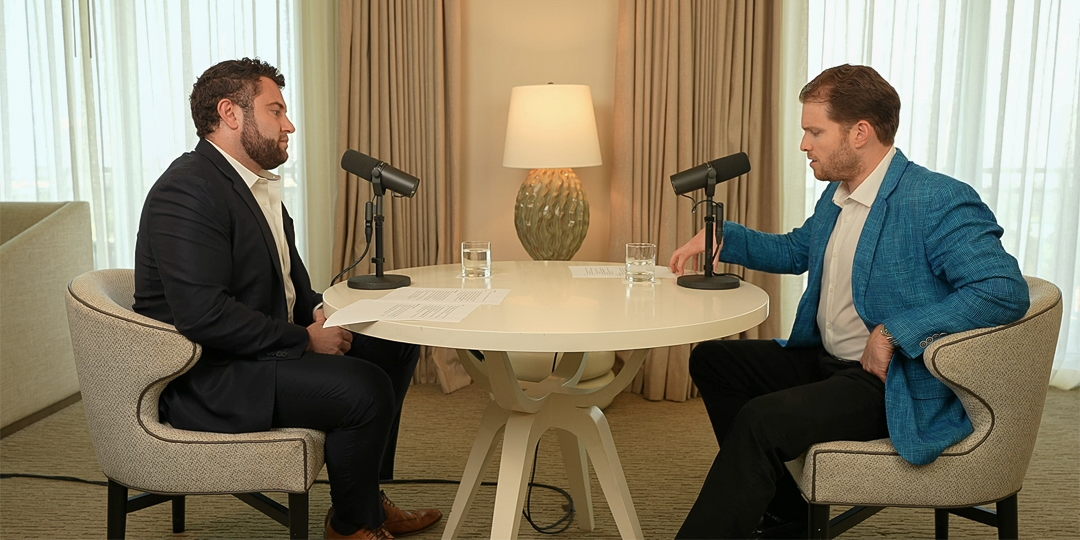
Opto co-founders Joe Lonsdale and Jacob Miller, and Janeen France of Addepar discuss how innovation and AI could rewire the old economy
Key takeaways
- AI is already delivering measurable productivity gains in sectors like construction, finance, and health care by automating complex workflows and enhancing operational efficiency.
- Successful AI investments hinge on backing companies with access to top talent and deep industry knowledge. Shallow applications of existing models are unlikely to create durable value.
- Private capital is accelerating innovation in critical areas including national defense, health care, and industrial automation, with wealth platforms like Opto and Addepar making these opportunities more accessible to advisors.
Transcript
Janeen France:
Hello everyone. Thank you for joining our webinar today. Before we begin, I want to cover a few housekeeping items. Due to our time constraints, we will only be taking questions via chat. You can go ahead and click on the q and a widget at the bottom and submit your questions. If we do not get to them during the presentation, we will follow up very shortly thereafter. If you are experiencing any technical difficulties today, please visit the help guide. This will cover common technical issues and you can do so by clicking on the question mark icon. And of course, following our event, you will receive a recording of the presentation. Please connect with your Addepar or opto representatives if you want to dive deeper into any of the topics that we discussed today. As a final reminder, the presentation and the content is confidential. It should not be reproduced or redistributed without the prior written approval of Addepar and Opto.
So with that, let's go ahead and get into it. Today. I am Janeen France, chief Client Officer here at Addepar. Joining me today are both Joe Lonsdale and Jacob Miller. Jake co-founded Opto with Joe and prior to founding Opto, he spent nearly five years as an investor at Bridgewater Associates. Joe Lonsdale is the founder and managing partner at 8VC. This is an early stage venture capital firm that manages over 6 billion in capital. In 2003, he founded Palantir Technologies, a software company that provides data analytics platforms known for its work supporting the US and its allies, defense and intelligence needs. Since then, Joe has founded more than a dozen prominent companies, including Addepar, a wealth management platform with about 8 trillion of assets on platform, as well as Opto investments and engineering the future of private markets for RIAs, family offices and private banks, and OpenGov, the leading cloud software provider for local governments. Joe continues to create and scale companies through the 8VC build program today. So gentlemen, great to be here with you today. Joe, why don't we start with you? There are two major themes that we've consistently heard you emphasize, and they are the real world impact of AI Beyond the current hype and the growing importance of defense and resilience, can we dive into AI first?
Joe Lonsdale:
Sure. Thanks Janeen for having me. It's good to have you all here. I'm actually flying right now to California from Texas because there's a lot going on in AI and for better or worse, it's still centered unfortunately on San Francisco and Palo Alto, and there's a lot going on out there. As you got to mentioned, the hype, listen, half of the money invested this year in venture capital as far as I understand it is going towards the model companies. And the way we look at it is there's really six levels of investment in AI you could do. I think it's an important framework and I think level zero, it's energy infrastructure and these companies, I had dinner last week with a bunch of the leaders, they keep almost purposely, I guess underestimating to everyone how much energy they're going to need because it's just such a big amount of CapEx.
They don't want to scare people, but they're working a hard audit secretly putting huge amounts of money towards that. So we're computer scientists. We started zero level one above that is chips. Level two is data centers, obviously a huge area three is these model companies, I say model companies by the way, that's philanthropic, that's Open AI, it's X AI, et cetera. Level four is software infrastructure, which is balanced here, which is a llama, which is tons of companies helping deploy AI. But then level five is actually the services and apps themselves using AI. And this is stuff that Addepar is doing by the way, that level five with alternative data management and stuff that the Opto is doing, of course itself with AI, with due diligence, AI, other types of things they're rolling out and there's really hundreds of new companies that are already increasing product under the economy at level five. These are real, they're not, pretend they're not future. We've already seen about 40% of our services economy in the us. That's 2 trillion out of the 5 trillion in wages where you can double a productivity. So this is real stuff and it's just like there was a huge SaaS wave of cloud companies 15 years ago that worked, which Addepar was one of them. There's a huge wave of AI companies. It's both going to improve the current SaaS companies and build new things in the services world. So a lot going on there.
Janeen France:
How do you separate the real world impact of AI from the noise and the hype we're seeing in the recent years?
Joe Lonsdale:
Well, listen, I think there's always going to be hype. In any venture situation, venture is very, very hard. It's fundamentally different than other types of investing because looking at new things and you're citing what's real and what's not real. And so I think venture capital as a whole, if you add everything up that goes on every last thing someone's pitching you, it's about a 0%, not a flat return on average. And that's because there's very high disparity. There's lots of things that are fake. There's lots of things that are hype. I think the question you want to ask, there's really two probably really important questions here to ask if you're an investor. One is, are you investing in the very best talent in the world? This is something you can measure. Most people don't know how to measure it, but if you're running a baseball team or as we just watched a great world series and you have a professional baseball team that's very different than a college baseball team, it's very different than a little league baseball team.
You can't tell a difference in the players. I guess you can from their size, but assuming they're all the same, if you can't tell the difference between a professional team and a local team, you shouldn't be betting on the baseball team. Just similar with that, there are people who are the very best in the world and the very top cultures. Those are the ones even more than other waves that are going to create all the value here and those tend to be real things when they're attracting lots of top people. The other thing I'd say is there is real productivity growth happening in our economy today. There's literally companies in these old services sectors where we're tripling the cash flows after we transform them. So I think look for real productivity growth in the real economy, for me, that's something you understand for sure and that's interesting to bet on.
And then look for making sure it's the top talent solving hard problems because that otherwise you're going to get a lot of hype where people wrap Open AI and just apply it and they get something that works right away, but it's not sustainable value for them because if they're not solving the other problems themselves. So you need to understand both of those. My view is you shouldn't be doing these bets yourself unless you're really in the middle of ecosystem. You should be betting on the very top to very top funds, but that's different views on that.
Jacob Miller:
I think it's just worth thinking about what is happening here on a, we're talking about a century ahead, but even in the next 10 years looking backwards, so much of productivity, growth and innovation has accrued to the good side of the equation. A TV the size of an entire wall costs about as much as a cathode array tube that was 16 inches across from 30 years ago. The goods deflation and improvement has been very real and we've been stuck on services. We're starting to see that change with AI and I don't think a lot of places are pricing in what that shift means yet. Just how inefficient a lot of real economy stuff is in building and permitting in healthcare, billing, finance, stuff that's really going to impact people's lives and increase the ability for everyone to innovate to found businesses. The barriers to entry are dropping.
Joe Lonsdale:
This is all going to change. Jake, I was with, I won't say which country, but I was with the prime minister of one of these Middle Eastern kingdoms a few days ago, and my friends have built a system for him that makes all the permitting in their whole country go through AI and it works within under 20 minutes now. So it's funny, but we need to copy them in Texas because even faster in Texas, but people have no idea how fast everything in the world when we talk about building the American century because the technology was American being applied there. It's like everything in services, everything in construction's going to get so much more efficient. You have a massive wave of disinflation coming, assuming we don't make it illegal, which I don't think we're going to, but that's the battle there.
Jacob Miller:
Yeah.
Janeen France:
So let's talk for a second about maybe some examples of AI that's being deployed in some of these critical sectors that you're mentioning. Healthcare, logistics.
Joe Lonsdale:
I mean there's a lot, right? So I think one type is really common in both healthcare and in finance and others is agents for back office processes. And so I'll give you one of these star kids who used to work for me 11 years ago. He spun out of our investment firm and he started Qualia and Qualia is the leading software, leading enterprise software for title insurance, which sounds a little bit niche, but there's being hundreds of millions of revenue. It's dominating the space. It's been a tough few years because title mortgages are down with the rates up, but now rates being cut, it's starting to grow again. And so there's thousands and thousands, maybe tens of thousands of these offices that need to hire people in order to grow and they're not able to find them very easily. And what's really cool is it turns out you can use AI agents to help a lot of this.
And so rather than have to hire a huge number of people, they can hire fewer and they make each more efficient with agents to make these title offices work better. And you're seeing this everywhere. You're seeing at the back of credit unions, you're seeing this in healthcare billing actually heard from one of the major insurance companies. They're annoyed because the AI is starting to help people do the billing better and they're not able to reject it as much anymore. It's sitting there profits, oh, it's pretty funny. But there's just a lot of really, really good AI productivity workflows being rolled out and logistics you mentioned there's a lot of stuff there, but CH Robinson is probably the biggest broker. There's tens of thousands of these smaller brokers in this space. One of 'em in town nearby us is a pretty major one. And our friend who sold Deliver, which was a multi-billion dollar logistics company, his next thing is agents for helping these brokers do their everyday workflow and coordinate on billing and invoicing and pricing and negotiating and managing cargoes because all these cargoes are all blowing everywhere like fault, how do you work together?
And these agents have just bought master productivity to the space. I think he's gone from zero to 30 or 40 million revenue in the last couple of years now just because it wasn't even possible before two years ago. So there's just a lot of this stuff's going fast and it's really starting to add productivity to these areas.
Janeen France:
So those are really great examples of companies that are going beyond chatbots, this image generation. What makes an AI services business investible today?
Joe Lonsdale:
I think to make it investible, like I said, you got to track the top talent BI think you should understand is this actually meaningfully adding productivity? Is it augmenting people as replacing certain things? And the Palantir framework is very, very helpful here. It's kind of fun when I talk about Palantir, people listen there because valued at half a trillion dollars. So since use, ignore us when we talk about these things, but the ontology of workflows, it's critical and it's actually central to the whole AI wave. And so what that means is when we talk about ontology and organizing information, people think of data and think of all the data in a company, and that's useful too. You have to map all of your data to a schema, to a framework so that talks to each other. But then on top of that you have to say, what are the processes that run my company?
If I have people working for me, what are they doing? And you have to map these things out and it's quite complicated to build that. It's actually oftentimes hundreds or thousands full nuanced processes to get the job done. And what you have to do is you have to say, okay, which of these things can we take where they are now and can we build something that augments us and makes it more productive? And you have to understand how it fits into those processes and to make it investible, you have to be doing something that's hard enough and interesting enough that you're working with a bunch of technologists and operators that you're not just applying the basics of the models. If you're just applying enro Open AI at a time bit of work, you're probably not going to create that much value. You might create some value, but they're probably going to get captured more by the AI companies. But if there's things to build, which there often are, to deploy it and to make it work and to operationalize it and to kind of build knowledge and nuance in the industry, and then as you scale you got more and more data from what you're doing and everyone wants to work with you. I think there's a lot of models like that right now today that are quite useful.
Jacob Miller:
Yeah, there's a couple of things I want to double down on there. I think there's something pretty important for investors to really internalize in what Joe said of if what you're investing in is that a relatively simple layer on top of one of these models, what is your barrier to entry for either another firm coming in or more likely if you actually are successful, the model companies will look and say, well, a two month build and now we can include that as part of our service. You're not adding real value. What Joe's talking about is you have to go really deep vertically or horizontally understand a series of interlocking processes in a way that is not going to be purely generative. You're going to have these pass offs between traditional compute, generative traditional compute, that map to really complex processes that hundreds of people have to oversee right now. That's where you can really create defensible space and earn trust. And one other quick thing to note is you can look beyond just backing companies that are directly AI right now. It's not as exciting of a 10 to a hundred to thousand x return, but in traditional private equity and lower middle market, you're just a consumer of these models. The better they get, the cheaper they get. If you can implement them in your lower middle market companies to improve processes even five or 10%, that's enough to generate some pretty attractive private equity returns.
Joe Lonsdale:
Yeah, I do think returns throughout the economy should go up as productivity increases. I think that's right, Jake, but I think if you're going to actually be investing in the core of this, you need to be investing with people who are tied to the very top talent and tied to those networks and ideally who have helped build great technology companies already because otherwise they're not going to know what it takes. And so it is very much an insider's game in a game of people who are already winning, are going to win more and not that's where it is.
Jacob Miller:
Yeah. Well, and the people in private equity who know the best technology networks will know which tools to actually implement. So you definitely want to be close to people who actually have the best talent and can build the right things here. If you adopt the wrong technology, you will not succeed.
Janeen France:
So for either of you, where do you really see the biggest near term opportunity in AI infrastructure or services?
Joe Lonsdale:
Well, for me in AI services, the biggest opportunity is just building and backing the very best of these companies. There's similar to the SaaS wave, I would guess there's going to be 500 to a thousand unicorns, like multibillion dollar companies that should exist upgrading productivity in a bunch of different niche areas of our economy. I think what I'm working on right now, some amazing young talent is they started off in the construction area with landscaping firms and their paperwork, which sounds pretty silly, but there's actually hundreds of thousands of these or each willing to pay a 10 to thousands a year to massively accelerate their work. And then we're adding on a bunch of other trades right now we're helping the trades work together and this is just one example, but I can very easily see that company being worth 10 or 20 billion. So for the stuff that it owns and fixes in the economy and the knowledge it builds out and the capabilities there, and that's not something anyone could do.
We happen to be backing one of the most amazing entrepreneurs I've worked with. You're a young talented person who's attracting other top talent, but that's what you want to be doing right now. It's kind of the early growth into the best talent going after these meet possibilities. That's the core of a venture capital is and this possibility existing now you could not have done three to five years ago and in five years from now it'll be too late. They will already be built by, the winners will emerge. And so to me that's the best opportunity for infrastructure. Listen, infrastructure is actually for me, harder in some ways. People, it's been a very easy and smart bet to do this with data centers the last 20 years to bet on. I think betting on energy is probably maybe not that hard. It's a good bet if you know what you're doing. I think the cash flows and energy are very compelling right now. So if you know what you're doing, I think there's some really, really good infrastructure buts there. It is not an area I know as well personally. So honestly I'm focusing on the thing that maybe it'd be harder for someone else to do, but for me in some ways it's easier. I know these top groups and I know how to build these companies.
Janeen France:
Joe, Jake, let's pivot to defense if we're comfortable with that. The National Defense Industrial Resilience, they're clearly resurging in importance. Why is now the right moment for venture to reengage with defense and maybe what are some of the surprising areas where venture backed defense startups are making a big impact?
Joe Lonsdale:
Sure. Well, this has all of a sudden become very popular the last few years, which I appreciate because Palantir was seen as an insane thing to try to do for a very long time, and no wanted to back us because it wasn't seen as something Silicon Valley could do. And frankly it was very hard. And history of defense, just to be really clear is we had all these gray American defense companies in 20th century and after the Cold War, the funding started to go down and they were encouraged to merge. And so about 80 companies merged into about really eight or nine companies became the primes. And there's still a lot of great talents and a lot of impressive things in the primes, but a lot of it has gotten worse. When the talent left for the Silicon Valley tech bubble starting 30 years ago, a lot of it got worse when it became too much like the government two bureaucratic and didn't really have as much competition.
And so what happened was this Palantir and SpaceX kind of found areas to build into and to get way ahead in both cases, it took a very long time. It was not naturally set up because the plan to capture the government, but eventually both of them broke through and became very successful. Shortly after that you had had Andurill, which was started by three of my former Palantir colleagues and Palmer Luckey, it's become a top new prime and it's also showing what's possible. And then because of that, you had a few more now. And so I think the right way to think about this is you're probably going to have eight to 10 new primes that are just significantly ahead of the old primes have modern tech cultures have top computer scientists in AI. They've can run circles around with these old because those guys have not been hiring and they're not able to hire and build the top technology cultures that you see now in our country, especially not on the computer science side.
So this is a great time. Cirrhotic is one example where actually delivered already 150 autonomous vessels we've built out of Austin. They're weaponized and teaching the Navy how to use AI. We're building the fastest big ships that anyone's built since World War ii. This is all stuff, it takes a huge amount of capital, but venture has grown up. When we build these companies now, we can't access that capital. The warning I would give, and it's a very exciting time because there's new possibilities. I think there's only going to be eight to 10 new very big companies. That's the nature of the ecosystem. And I think once those companies, as they start to win, get in there, it's going to be harder for others to break through. And so I'm actually not bullish on most funds doing widespread defense. I am bullish on people who are able to access the very top talent to build the very top new times.
Jacob Miller:
I think it's not a surprise that a lot of these firms that are actually changing how procurement and development is happening are coming out of the Palantir network. It is really hard to sell to the government, and procurement was generally broken. Folks in the Palantir network and endr have done a lot of work to bring some better processes, but it took a decade plus of experience of knowing who to talk to of how to work within these groups. And that is now being shared across that network. But that's a very hard cold start problem.
Joe Lonsdale:
You're right, Jake. And there is some recognition in the government to change processes to make it more fair, to open it up. And it's definitely a lot better today. This department of war really has a lot of people pushing out fair competitions. But you're right, it's still so difficult compared to what it should do.
Jacob Miller:
And I think what is powerful here is the companies we're talking about generally have a couple people who really know how this works. I mean, Dino was a Navy Seal as well as being able to track the top technology. If you have the top technology but don't know how to actually talk to the right groups and show what you can do, you're going to be dead in the water. And so bringing those under one roof
Joe Lonsdale:
Is powerful. And Dino co-founder, his uncle Bill Reagan's Navy was secretary of the Navy and one of the guys on that team ran acquisition for the Navy. I mean, you really got to sack these things as best you can and have the best technology. So this is why they're so hard to build. So I don't think anyone should be building these unless they're have huge unfair advantage for some reason on the technology side and the government side, which is quite hard.
Jacob Miller:
And then Janeen, to your other question around resilience and robustness, I think part of this, the answer to both of those and the why now is America is the best operating system that humans have developed to run is things we need to fix and keep improving on. But we are being challenged by mainly China right now for supremacy. We are behind in terms of just raw industrial capacity and probably too reliant there. And so obviously want to keep the world safe but also can't let ourselves fall behind.
Joe Lonsdale:
It's important that the authoritarian and ideologies don't win. We're all going to be a lot better off and our kids in greens are going to be better off if we can keep America a principle of nation that has checks on power and that we make sure our values going to. I totally agree.
Janeen France:
I want to drive us to how wealth managers, excuse me, can participate in the value creation. But before that, just one last sector, which is the healthcare services space, they are seemingly ripe for re-imagination. And Joe, you've invested in many companies across all of these industries sectors we've been talking about, but for healthcare services in particular, where do you see the biggest bottlenecks today that startups can unlock?
Joe Lonsdale:
Sure. Well, listen, I'll start by the caveat that my old friend Peter Thiel refuses to invest in this sector for now. According to him, I think he said this on my podcast as well. So it's public. He just had a few things that didn't work and it's too hard. And it's just like there's all these reasons why it's too hard. And I respect where he is coming from as a patriotic American who's maybe willing to pick up this sword and charge for it a little bit too much. I think you have to try anyway. And we are starting to see some things work. And listen, we all know healthcare is about a fifth of our national spend. It's the area that will bankrupt our country of over a hundred trillion dollars in promises. We have to fix this. And here's what's crazy. We all know that with AI, it's possible for it to be way more efficient.
The big question is not can we make it more efficient? Can we provide better healthcare to everyone technologically? The question is, is it going to be illegal to do so? Right? So you have a lot of people trying to make it illegal to innovate in healthcare, we're very scared when you innovate in healthcare and Illinois has already banned the use of AI and mental health, which I think is actually totally insane because we're seeing really good early results for people who otherwise don't have the bandwidth to get help to be helped by these things. It doesn't mean that every solution is going to be correct, but it's crazy not to let people innovate and improve those areas. And so right now, for example, Harbor Health, we have our own health system in Texas. It has I think like 40 to 50 clinics already. It's a major primary care system.
We're building specialties on top of it and we're building AI right now into it to help each doctor to be far more productive, to both have a better patient experience, but make sure each doctor is able to do a lot more and to not make mistakes. And by the way, doctors are one of the most arrogant groups I work with in general. I'll just say it flat outright. They're very skeptical of being told to improve themselves. But listen, as a pathologist for example, if you're looking at a cancer slide, there's about six to 12% mistakes made depending on the doctors looking at a slide for pathology, the AI makes less than half a percent mistake. It's the same thing in radiology. It's the same thing with, we have a friend who was doing IVF recently and we checked and there's all these things you could take to make your idea f more successful.
There are supplements. And she asked the doctors and they said, oh yeah, that's true. We probably should think about telling patients that you probably should think about telling patients to raise their success when they're going through that. It's like AI is way ahead in a lot of areas. We have to be careful how it's used, but that's going to be the big fight because we can make healthcare more productive and better for everyone, but people are trying to make that illegal. So I think it's worth investing in a building Peter's right that it's risky. If we can't make it work, you're going to see some great results.
Janeen France:
Yeah, I agree. Sometimes the most difficult things are the ones that we get the most incredible innovations from Once we solve the unlocks. Jake given Joe's comments, we know that private capital is funding and driving a lot of innovation and you and Joe built opto to engineer the future of the private markets for the wealth community broadly and solve a lot of the inefficiencies that exists across wealth today. So talk to just a bit about how you and Opto are giving advisors access to some of the exciting opportunities that Joe's mentioning a bit more at scale and also perhaps just broader asset classes.
Jacob Miller:
Yeah, I mean I think Joe already touched on one of the most important things here, which is the power of networks in private markets, information is siloed, access is siloed. Often the things that are broadly sold are the things that a bunch of people passed on before they went to market and paid people to sell for them. And so you really want to make sure you are in the right rooms, having the right conversations with people who really know what's working and what's not. But it's hard to scale that. And so one of our technology challenges is how do you take the inherently human and small scale aspect of the best investment networks and make those accessible, understandable and provide the right access? It's one of the reasons we took a very different stance than a lot of other folks in the market. We don't get paid by the people raising capital, which creates some adverse selection risk. We sit on the same side of the table. We're buyers on behalf of our clients and partners too, not sellers too. It's the old social media thing. If you're not paying for it, you're probably the product.
And look, it's also about how do you customize at scale? Obviously on the public market side it's become very easy to create SMAs and custom exposures and doing that at various scales and check sizes. That's not so far the case in private markets. It'll probably never be exactly pari passu there, but how do you give CIOs advisors, family offices, the tools to think really deeply about portfolio needs and actually match those to allocations? There's a big disconnect between the portfolio and the deal level for a lot of people and how do you bring those closer together?
And then last point I'll make here, I'll bring it back to the AI point and one thing I think about a lot is how do you use technology to make small teams feel really big? And I think this is just as true of Addepar as well. How do you empower the human who is in the loop to the outside world almost look like that's 10 people and a bunch of other tech. And so things like our due diligence AI platform where you can screen thousands of deals where maybe before your team can only screen 30 a month. Things like being able to really quickly spin up new structures and legal docs to automate sub docs, to have integrations into Addepar and custody and just take the rote out of people's lives and allow 'em to focus on building their businesses and investing well. So technology is also changing that ability at the same time as there are more opportunities.
Joe Lonsdale:
Well said Jake. I think the wealth channel as it's called in New York City and high finance has oftentimes been seen as a place that scale to sell just standard or even sometimes what I would see as mediocre stuff, they're just going to try to span and it's seen as a low end of the market to just sell things at scale. And I think that's pretty offensive to a lot of great RIAs that I know. I obviously got to know hundreds of RIAs I admire and wealth I admire through having built data par over the years. And I think the access they have to my world and to other top parts of the alternative world is very misaligned. It's very much people getting paid to sell them stuff and it's not about them customizing things to their clients. It's not about them accessing the very best things.
I think my family office is all my mentors family offices. See, that doesn't really get to res very often. I think when they do get to see one-off stuff, it's more or less sketchy brokers, which is unfortunate. And so the idea was we created a align the model and one thing I really like about how we set up Opto for me is that one of our biggest ways we get paid is this 5% carry over a hurdle for a lot of our custom funds. So we will actually set up custom funds, give people exposure to a lot of things that I'm doing that my friend's doing that we're bullish on that let them help customize it for their clients and doing this customization at scale while exposing other things that we only win when they win at scale. And it's a long-term model for me.
That's something I'm really excited just to build out. I'd love to have hundreds of billions of dollars eventually, but really probably targeted right now it's just billions ands of dollars, which actually makes it, I think this is a really good time to be in it. We can have really, really best stop, to be honest. I'm not sure how we do it a trillion dollars. Maybe it won't work eventually, but for now and for the next decade as we scale what we are right now, I think there's so much of the favor things that are on there and we can get access to you and which has been fun for me.
Janeen France:
Yeah, that makes sense. And I think talking about the Addepar component of it and the value proposition of where Addepar and Opto are trying to solve this together is ultimately helping wealth management community drive more informed and transparent decisions around their alternative investments. And so
It's been really important on the Addepar side that we get our hands wrapped around helping them take private markets investments in this interest in this area, which is knowingly an incredibly complex space. The data behind it is fragmented, it's unstructured, it's spread across portals and PDFs and it's just really challenging to get a really clear, timely view of what's actually going on. And so our piece of the puzzle is normalizing and connecting that data across all of the different types of asset classes or ownership structure and currency to create a foundational component to support whether it might be accurate reporting, performance analytics, liquidity planning, whatever advisors need to have the most visibility and confidence to take next steps in managing complex portfolio, looking at other investments or through the opto experience.
Joe Lonsdale:
And Janeen, I know a lot of our friends who are close to on our Addepar platform are really excited to the new AI abilities for alternative data management. Is that something we're offering to people at Scalia? Because a lot of people have been asking me about that because the rumor's getting out right now and I think it's working quite well.
Janeen France:
Yes, yes it is. And that's a really, really important piece of the puzzle. The Allstate of management is utilizing both machine learning and human verification to do that extraction of information from those unstructured documents, talking cap calls, distribution notices, and then that data becomes the accurate foundational component within the platform. And so taking what was obviously very cumbersome and human manual intervention and utilizing that AI piece to be able to help move them more quickly and in a far more robust way to getting that information for their underlying clients.
Joe Lonsdale:
If I was an REA with 50, let alone a couple hundred clients, even 30 clients, I'd be really annoyed 10 years ago to have to do alts. It's just a lot of work and this is a lot of mess and it's a lot of areas to make mistakes. I'm really excited about what Addepar and Opto have each kind of built out to make it. I mean, it's not quite as easy as buying a public stock. That's where we're going eventually is to make it all the way there, but it's getting a lot closer, a lot less headache. And so if people haven't checked this out, I do think that was a bigger barrier than I had understood previously to making it easier for wealth managers to access this. And I think that it's amazing what you guys have built there.
Jacob Miller:
Yeah, and I think Jeremy, you mentioned earlier as venture, we always want to think about what was possible now that wasn't possible five years ago. Part of this evolution is, it's not the perfect metaphor, but I started think about Addepar as the iPhone. You need a base layer of what is, where am I, what do I hold? And not enough people even can answer those questions. Once you have that, you can build the Uber app on top of it, but without that you're flying blind.
Joe Lonsdale:
Yep, a hundred percent.
Janeen France:
Okay. I would like to pivot us to some of the questions that are coming in. Quick reminder that if you do have questions, again, please use the question submission button. If we can't get to them, we will follow up after. So Joe, first one for you, and you did touch on this already a bit, but how do you view separating truly transformative AI businesses from those just repackaging existing tech with an AI label?
Joe Lonsdale:
Yeah, I mean I think it's a few different things. One, are you meaningfully impacting the productivity of workflows? Are you building an ontology of workflows, understanding it and changing? If you're not, it's probably going to be tough to fix productivity. That's one. And then two, it was like who are your talents? Are they solving hard problems here or are you just literally making calls to Open AI or to whatever you're using on the backend? For me, it's really digging in and seeing how hard would the speed to make myself and how hard would it be to make with others. I think you have to have technologists on your team to do this. There's a funny story I heard where one group was trying to sell a technology the other day and there was due diligence being done for a major buyer and the people doing the due diligence use AI and they rebuilt the system in less than two weeks as part of the due diligence to show the buyer and it's forced the buyer passed. So I think there's things like that where we've got to be really careful right now.
Janeen France:
Alright, sorry, reading through these maybe more of a quick easy one for Jake around what is the minimum invested in private equity offered by Opto?
Jacob Miller:
So because we're enabling customization at the firm level, you can make it quite low for your end clients. Most of our partner firms choose to set it somewhere between a hundred K and 250 K, but you can wave that down and these are a liquid investments. You probably want to be talking to people who are not going to need that capital in the next five to seven years. And most people are pretty severely underweight private markets, and so I wouldn't throw a very small check in. People should be targeting 10, 15, 20 5% depending on their wealth level, but so the simple answer is a hundred K at the client level, we try and build funds that are at least 15 20 million overall, but then also do direct investments throughout the year with clients that are at much smaller sizes.
Joe Lonsdale:
And when you say 10, 15, 20%, both Addepar and Opto have models of course that help people plan for the next decade. It really is a liquidity planning thing where you want to hit 20% maybe over three or five years, not necessarily in the force shift you write of course, but that makes sense, Jake.
Janeen France:
Alright, I think this unsurprisingly is another one for Joe, but maybe Jake can add on as well. So Joe, I've heard you say solving big problems requires a tech mindset and a lot of patients, I think opto out par really create examples of that, but how does it really make you better than the legacy companies out there who have been investing, sorry, who have been in the space for longer
Joe Lonsdale:
And I guess I'd probably use the word persistence rather than patience. I'm a very impatient person. I'm told that's a fly I have to work on, but I'm not sure. As an entrepreneur, you want to be too patient, keep going really fast every week and then eventually after iterating lots of times you get there. Listen, at par when we created the company was the first cloud company in the space. You had a lot of things that have been frankly bought by private equity firms that were focused on their cashflow that were under investing in their companies. And it's just so many things to get right for our clients where there's a trade off where you can say, oh, it's good enough, the client should just figure it out. Or you could say, actually we're going to talk to the client and whenever it's happening we're going to put it on our stack and we're going to make sure it becomes something that we solve, whether we solve it right away or solve it over the next year or two.
So Addepar has been around now for, I think we're almost 16 years old and it's still investing massively, massively in the product and so it's already by far the best product, but this is just our way of doing these as how Eric and I see the world. It for us, it's almost like an ethical thing where we want to just keep making it better and making it the best. And we're doing that because we're building this company for 2035. We're not building it to sell to private equity. If you're trying to build to to private equity, we'd probably slash 150 million of expenses and gus up all the numbers and we'd have a lot more annoyed clients, but they wouldn't be annoyed enough to quit and that would be the private equity playbook and that's what our competitors had already done a long time. It goes through, we're just so far ahead of in so many these areas. And then as the AI possibilities makes everyone's life easier and better, we're going to be, not only are we there first of all already, we're going to be there first for the next few years of that as well. It's just a lot of things that are delighting our clients, which I'm really taught it.
Janeen France:
There are a lot of questions coming in, so trying to keep up here as an investor, what is the best way to ascertain how good a firm's talent is?
Joe Lonsdale:
I don't think you should be trying to do this unless you already have people on your side who are from those cultures. And so I think the best way to do it is to either, if you yourself are not a founder, one of these companies, you should get, find a way to be allied with them, find a way to be allied with people who are from these technology cultures, who are from that world, who themselves have hired and managed some of the top talents. And so you have to have a way you're aligned with those people. The most common way to do that is to be invested in funds that have already had a track record auto correlation of funds. So get funds that have already part of the big wins, ideally people involved and those funds were involved in the companies and make sure you see the real results and then partner with them and that if you're partner with them, you can use them to help you in other things as well sometimes.
And you can be part of their network by the fact that you are writing checks in these networks, then you get to know people and you get to know people to partner with. So I don't think you could just do it as an outsider. I think you have to have insiders who successful in those worlds you are backing. Listen, I have friends who knew nothing about technology five or 10 years ago who've written a bunch of checks, very intelligent. You spent a bunch of time there and have become very, very good at figuring this out with a lot of friends, helping them. But it takes a lot of effort. It takes writing the checks into top places
Jacob Miller:
And look, it is more than a full-time job to stay on top of and nurture talent networks and yeah, you just need to find someone who you believe is doing that actively in the right places and identifying new pools of talent because also as soon as someone figures it out, Google will come in and pay crazy signing bonuses and not network over.
Joe Lonsdale:
I am literally on a plane right now flying to California with multiple talent events and group meetings while I'm out there with the top people and working very hard on this. By the way, Elon Musk also lives in Austin, Texas as a friend and he's also having to catch his days now, unfortunately for him in California as well, because now right now he's where the very top talent is and he's out there fighting and combat as well. So if I'm out there doing it, Elon's out there doing it. It's like El want to have the very best people on your team. You can't just naturally do it yourself and far away.
Janeen France:
All right, I think we have time for one last one, Joe, want to kick this off, which frontier areas are likely to see commercial inflection points in the next five years?
Joe Lonsdale:
There's a lot of fun stuff. That's a great question. My favorite frontier area that I'm seeing really work is some areas of robotics. And the one I'll give you in particular is a lot of my friends were involved in Waymo. We all know Waymo, the self-driving car company. It's rolling out a bunch of cities, it's really cool. Elon Zang with Tesla, a lot of these Waymo guys left to build this company bedrock that were involved in, and it's building autonomous excavators and it's really fun. So excavators are about 25% of all work in construction and there's just a massive number of things. If you know what Jevons paradox is, when people made coal plants way more efficient, they thought the price of coal would go down, but instead it increased demand so much that the price of coal went way up. This is a 19th century phenomenon.
Similarly to today, if you can bring the cost of certain types of construction down, this makes a lot more plants pencil a lot more buildings pencil. I think it actually creates a ton more economic activity and it's a very positive loop. And so I think you're seeing a lot of stuff in advanced manufacturing we're doing, and robotics in particular as frontier that I'm very excited about. You're also seeing AI just able to do things for productivity, which to me is a frontier of actually running back offices much better. That's just been a massively accelerate. So I'm not as bullish on quantum in the near term. I'm not as bullish on fusion in the next five years, although you're getting some interesting proof points that I think matter a lot on a 15 year horizon. But literally in the next five years, you're going to be employing AI both in the world of bits, but also in the world of atoms for destruction. Otherwise.
Jacob Miller:
Yeah, I think the one I might add is also in the drug discovery and biotech side, the impact that having real technology platforms as well as AI infrastructure to assist researchers is having there. A lot of stuff is still early, but animal results in certain new drugs are extremely promising and super excited to see how that technology continues to evolve and everything customized treatment.
Joe Lonsdale:
That's a great point, Jake. I think we're going to save, save lives of hopefully over a hundred thousand children in the next five years who would've otherwise passed or been very hurt by monogenic disorders. There's a lot of things like that, but she's starting to work really well that I think this FDA hopefully is set up to push that forward. We're working hard on that. So yeah, you're right. There's other areas like that that we shall be rooting forward, pushing forward.
Janeen France:
Wonderful. Well again, Joe, Jake, thank you both for such an insightful discussion. It was a pleasure to be here with both of you today. We covered a lot of ground from the real world impact of AI to the resurgence of the industrial innovation and how private markets are reshaping the modern wealth management space. But the takeaway is clear. The most exciting innovation opportunities ahead of us are going to require both conviction and clarity. I believe together opto and Addepar do make that possible and giving advisors access to not only high quality private investments, but also the real data intelligence behind it to manage and report with confidence. So we do hope today's conversation sparks some new ideas and perspectives that you can bring to your clients. Thank you for spending the last 45 minutes with us and keep an eye out for the recording and the follow-up resources in your inbox.
Joe Lonsdale:
Thanks, Janeen and Jake. Take care.
Janeen France:
Thank you. Bye-bye.
Important disclosures
Opto Investment Management, LLC (the “Firm”) is a wholly-owned subsidiary of Opto Investments, Inc. and is an SEC-registered investment advisor. Registration with the SEC does not imply a certain level of skill or training. SEC registration does not mean the SEC has approved of the services of the investment adviser. This website is operated and maintained by Opto Investments, Inc. Certain products described herein and institutional relationships may involve investment advisory services provided by the Firm. This website is presented for financial institutions and investment professionals only and is not intended for individual consumers or retail investors, unless specifically noted. Unless otherwise indicated, commentary on this site reflects the personal opinions, viewpoints and analyses of the author and should not be regarded as a description of services provided by the Firm or its affiliates. The opinions expressed here are for general informational purposes only and are not intended to provide specific advice or recommendations for any individual on any security or advisory service. It is only intended to provide education about the financial industry. The views reflected in the commentary are subject to change at any time without notice. While all information presented, including from external, linked or independent sources, is believed to be reliable, we make no representation or warranty as to accuracy or completeness. We reserve the right to change any part of these materials without notice and assume no obligation to provide updates. Nothing on this site constitutes investment advice, performance data or a recommendation that any particular security, portfolio of securities, transaction or investment strategy is suitable for any specific person. We disclaim any responsibility for information, services or products found on linked websites. Images and photographs are included for the sole purpose of visually enhancing the website. None of them show current or former clients and should not be construed as an endorsement or testimonial. All investing is subject to risk, including loss of principal. Historical performance is not a guarantee of future performance and clients may experience different results. This information contains certain “forward-looking statements,” which may be identified by the use of such words as “believe,” “expect,” “anticipate,” “should,” “planned,” “estimated,” “potential” and other similar terms. Examples of forward-looking statements include, but are not limited to, estimates with respect to financial condition, results of operations, and success or lack of success of the depicted investment strategy. All are subject to various factors, including, but not limited to general and local economic conditions, changing levels of competition within certain industries and markets, changes in interest rates, changes in legislation or regulation, and other economic, competitive, governmental, regulatory and technological factors affecting operations that could cause actual results to differ materially from projected results. See related disclosures at https://www.optoinvest.com/disclaimers.