%20(1).png?width=600&height=338&name=menu_thumbnail%20(4)%20(1).png)
%201.svg)



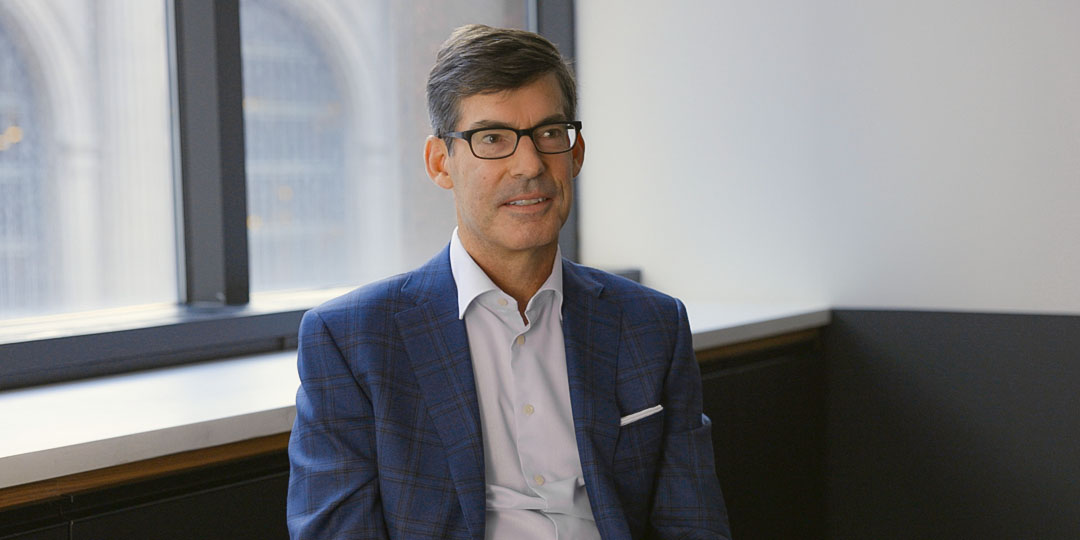
David Barnard and Dan Feder discuss the whys and hows for advisors introducing a private markets allocation
Key Takeaways
- Luminary CEO and former Alliance Bernstein Head of Wealth Management David Barnard and Senior Managing Director of Investments at the University of Michigan Endowment Daniel Feder share some insights for advisors on introducing private market allocations.
- Private markets can offer the chance to access opportunities unavailable via public markets, providing diversification via differing drivers of returns.
- Returns from private market funds have a much wider dispersion, which means it's crucial to find fund managers that can access the most unique, idiosyncratic investment opportunities.
- Private market investments need to be presented to clients as more of a necessity than a luxury, though advisors should be prepared to discuss some unfamiliar challenges, such as liquidity and fees.
Transcript
David Barnard (Former Head of Private Wealth, Alliance Bernstein) I think you're seeing the embrace of private market investments happen in the advisor community. It's been slow and inconsistent so far, but I think that's about to change the way private market investments ultimately impact a portfolio. So really depends on the types of investments that are chosen, which really is working backwards from what are the overall goals of the portfolio in the first place. There's opportunities to enhance returns with earlier-stage private equity investments such as venture capital. There's opportunities to enhance the income characteristics of a portfolio with things like private credit and some combination of both of those, as well as things like real estate and private equity themselves can be diversified because private markets will look at and consider a much broader opportunity sets than just the public markets themselves. Most people don't realize, actually, over the course of the last 20 years, the number of publicly traded stocks has been cut almost in half. In addition to more companies to choose from. Because private companies are not covered by Wall Street analysts, there tends to be more unlocked value there.
Dan Feder (Managing Director of Private Equity and Venture Capital,University of Michigan Endowment) With private markets, we're trying to reach investment opportunities that are not otherwise reachable through more liquid means. So people generally talk about private markets or private equity or venture capital. Oftentimes they speak of it in terms of what sort of diversifying elements to those areas of investing bring to a portfolio. And there is some diversification that comes from investing in private markets by virtue of the fact that we are trying to reach or we do reach investments that we wouldn't otherwise see in a portfolio. But they are diversifying in the way that many people think of diversification. They are diversifying because they also bring different drivers of return and in some cases, those are less correlated to public markets. The real impact is around the potential for increased returns. Well, historically, the highest bang for the buck has been in venture capital and the private equity, those are the regions in which uncertainty is highest and risk is highest. And if you're well positioned, you have an opportunity to make great returns. Now that also means you have the opportunity to make horrible returns. The dispersion of returns and venture capital is the broadest among all investment classes. Private equity is next and natural resources are going to next. And then real estate and so forth. The dispersion is where you want to play, and that's where if you're well-positioned, again, you have an opportunity to get the most bang for your buck, plus or minus.
David Barnard If you think about the way investors and public markets, mutual funds, for example, are evaluated, the difference between a good manager and a great manager is usually a percent or two. The difference between good and great in the private markets is ten times that. And so it's really, really important to have access to the folks that themselves are looking at their most unique, idiosyncratic investment opportunity cities and being able to invest alongside them.
Dan Feder There are five things that I believe all managers have to do and have to do well. Those five things are sourcing investment opportunities, transacting them well, owning their investments well during a holding period. Actually well, and then running their firms. So the first four of those are opportunities to create value for an investment. The fifth one is important, but it is more of an opportunity, if not done well, to destroy value. And in the private markets, the two areas that are that figure most prominently in value add are sourcing and owning. So are there differentiated ways that a good investor sources investment opportunities? And then the other most prominent or most visible way that value add is put into the system is by owning investments. Well, being a good partner and facilitator of value add to founders and management teams of venture-backed companies and so forth. So when we look at opportunities, we're really looking at through that basic framework.
David Barnard Private market investments is something that really needs to be introduced to clients as something that's more of a necessity than a luxury. When you think about solving for that upper single digit return in an overall balanced allocation, you're not going to get there with conventional stocks and bonds. Advisors are going to have to cast a broader net and think about bringing asset classes into the allocation that they might not have had to consider before. And of course, when you're introducing private markets, there are some challenges associated with the asset class, at least things that are unfamiliar to folks that have not invested there before, not the least of which would be, I think, liquidity and fees. But when you consider what generally speaking will be a private markets allocation that still has us around it quite a bit in the way of assets in public markets, the overall impact to the portfolio in terms of access to liquidity and overall fee impact will be manageable. But again, in terms of the moment in time when this conversation is actually happening, this is really about a need to improve the overall composition of a portfolio. It's really not a luxury.
Important disclosures
Opto Investment Management, LLC (the “Firm”) is a wholly-owned subsidiary of Opto Investments, Inc. and is an SEC-registered investment advisor. Registration with the SEC does not imply a certain level of skill or training. SEC registration does not mean the SEC has approved of the services of the investment adviser. This website is operated and maintained by Opto Investments, Inc. Certain products described herein and institutional relationships may involve investment advisory services provided by the Firm. This website is presented for financial institutions and investment professionals only and is not intended for individual consumers or retail investors, unless specifically noted. Unless otherwise indicated, commentary on this site reflects the personal opinions, viewpoints and analyses of the author and should not be regarded as a description of services provided by the Firm or its affiliates. The opinions expressed here are for general informational purposes only and are not intended to provide specific advice or recommendations for any individual on any security or advisory service. It is only intended to provide education about the financial industry. The views reflected in the commentary are subject to change at any time without notice. While all information presented, including from external, linked or independent sources, is believed to be reliable, we make no representation or warranty as to accuracy or completeness. We reserve the right to change any part of these materials without notice and assume no obligation to provide updates. Nothing on this site constitutes investment advice, performance data or a recommendation that any particular security, portfolio of securities, transaction or investment strategy is suitable for any specific person. We disclaim any responsibility for information, services or products found on linked websites. Images and photographs are included for the sole purpose of visually enhancing the website. None of them show current or former clients and should not be construed as an endorsement or testimonial. All investing is subject to risk, including loss of principal. Historical performance is not a guarantee of future performance and clients may experience different results. This information contains certain “forward-looking statements,” which may be identified by the use of such words as “believe,” “expect,” “anticipate,” “should,” “planned,” “estimated,” “potential” and other similar terms. Examples of forward-looking statements include, but are not limited to, estimates with respect to financial condition, results of operations, and success or lack of success of the depicted investment strategy. All are subject to various factors, including, but not limited to general and local economic conditions, changing levels of competition within certain industries and markets, changes in interest rates, changes in legislation or regulation, and other economic, competitive, governmental, regulatory and technological factors affecting operations that could cause actual results to differ materially from projected results. See related disclosures at https://www.optoinvest.com/disclaimers.