%20(1).png?width=600&height=338&name=menu_thumbnail%20(4)%20(1).png)
%201.svg)


Risk can be broken into: market risk, liquidity risk, and leverage risk.
Key Takeaways
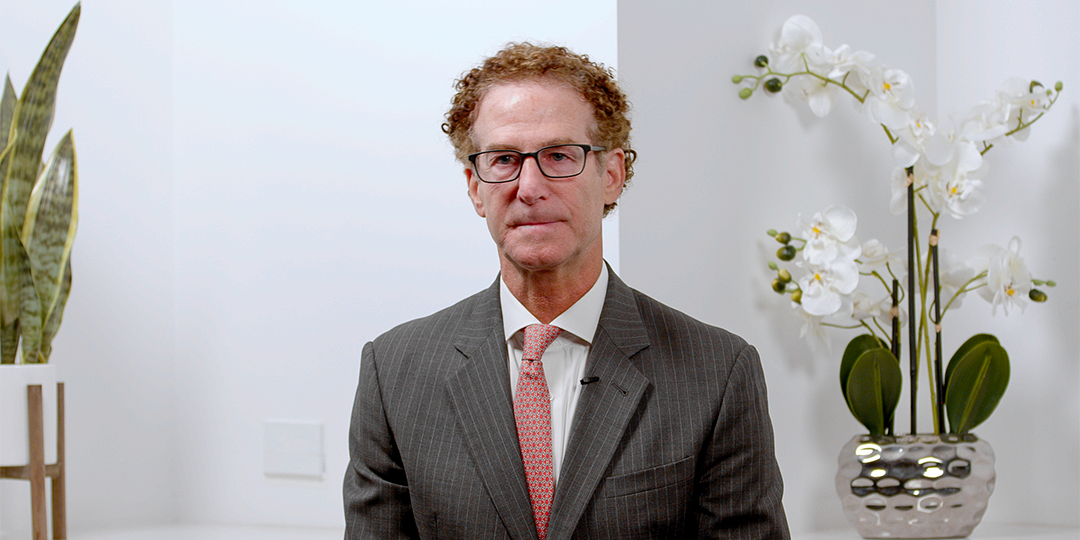
- Mark Machin, CEO of Opto, former head of one of the world's largest pensions, CPPIB, and Goldman Sachs partner, explains his framework for assessing how much risk to take in a portfolio.
- The main risk he and many investors focus on is market risk - how volatile is the portfolio?
- Private markets tend to mute portfolio volatility but have a unique risk - liquidity. Ensuring you're liquid enough that if all asset prices tank, you still have enough liquidity to cover your liabilities is critical.
- There's also leverage risk (or credit risk). This is a bit less important for advisors, but they may want to mind that unpaid liabilities can negatively impact credit scores.
Transcript
I'm Mark Machin. I was formerly the president and CEO of the Canada Pension Plan Investment Board, or CPP Investments.
Risk is the number one most important thing that people need to think about in any investment portfolio. Your appetite for risk because it's impossible to make investment returns without taking risk. And so the number one question is OK, so how much risk can I take? One of the first dimensions of thinking about risk and risk appetite is market risk and thinking about what appetite do I have for volatility in markets?
Markets are inherently volatile. Based on that, you can quantify how much appetite I have for that volatility, how much risk I can take that markets will be down 20% by next year. So you can look at historical market behavior, you can look at the percentage likelihood of a major move in markets and say, OK, I'm prepared to take this quantity of risk from a market volatility perspective.
The other two dimensions we looked at other than market risk, would be how many obligations I have to pay over the next, say, ten days, over the next year. And if everything goes to hell, do I have the cash to be able to pay that? So that's a measure of how much illiquidity I can tolerate. What do I have in reserve to pay those obligations, even if everything goes wrong in my investment portfolio?
And likewise, you could look at leverage as well. Some institutions have a credit rating they want to maintain, and they don't want to trigger various leverage limits. So if everything goes wrong, have I triggered a leverage limit and maybe on a personal front, it would be the same thing. You know, you have your credit score and you probably don't want to breach certain levels on that if everything goes wrong in your portfolio.
So thinking about market volatility, think about leverage and liquidity, different dimensions of thinking about risk. Then you've got a pretty good idea of what your risk appetite is, how much risk you should take, and you can sleep at night because even if things go wrong, you know you've still taken the right amount of risk.
Important disclosures
Opto Investment Management, LLC (the “Firm”) is a wholly-owned subsidiary of Opto Investments, Inc. and is an SEC-registered investment advisor. Registration with the SEC does not imply a certain level of skill or training. SEC registration does not mean the SEC has approved of the services of the investment adviser. This website is operated and maintained by Opto Investments, Inc. Certain products described herein and institutional relationships may involve investment advisory services provided by the Firm. This website is presented for financial institutions and investment professionals only and is not intended for individual consumers or retail investors, unless specifically noted. Unless otherwise indicated, commentary on this site reflects the personal opinions, viewpoints and analyses of the author and should not be regarded as a description of services provided by the Firm or its affiliates. The opinions expressed here are for general informational purposes only and are not intended to provide specific advice or recommendations for any individual on any security or advisory service. It is only intended to provide education about the financial industry. The views reflected in the commentary are subject to change at any time without notice. While all information presented, including from external, linked or independent sources, is believed to be reliable, we make no representation or warranty as to accuracy or completeness. We reserve the right to change any part of these materials without notice and assume no obligation to provide updates. Nothing on this site constitutes investment advice, performance data or a recommendation that any particular security, portfolio of securities, transaction or investment strategy is suitable for any specific person. We disclaim any responsibility for information, services or products found on linked websites. Images and photographs are included for the sole purpose of visually enhancing the website. None of them show current or former clients and should not be construed as an endorsement or testimonial. All investing is subject to risk, including loss of principal. Historical performance is not a guarantee of future performance and clients may experience different results. This information contains certain “forward-looking statements,” which may be identified by the use of such words as “believe,” “expect,” “anticipate,” “should,” “planned,” “estimated,” “potential” and other similar terms. Examples of forward-looking statements include, but are not limited to, estimates with respect to financial condition, results of operations, and success or lack of success of the depicted investment strategy. All are subject to various factors, including, but not limited to general and local economic conditions, changing levels of competition within certain industries and markets, changes in interest rates, changes in legislation or regulation, and other economic, competitive, governmental, regulatory and technological factors affecting operations that could cause actual results to differ materially from projected results. See related disclosures at https://www.optoinvest.com/disclaimers.