%20(1).png?width=600&height=338&name=menu_thumbnail%20(4)%20(1).png)
%201.svg)


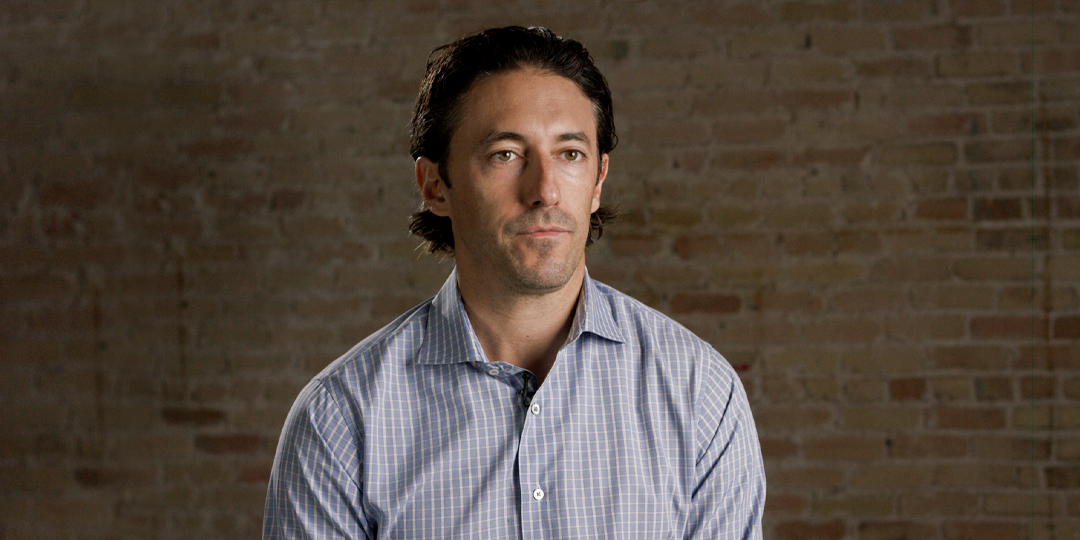
Andrew Joblin discusses Turnbridge Equities' direct real estate investment strategy and business model
Key Takeaways
- Turnbridge Equities invests in value add, opportunistic, and distressed real estate with a focus on high barrier-to-entry markets and areas with population growth, low cost of living, and good education systems.
- As a direct real estate fund, it avoids double layers of fees, which should better align incentives with investors. Its team executes its business plans in-house.
- Turnbridge Equities is interested in growth markets like the “Research Triangle” in North Carolina, which is experiencing a boom in life sciences, alongside a great education system, low cost of living, and rapid job growth.
Transcript
Hi, I'm Andrew Joblin, managing partner and founder of Turnbridge Equities. Turnbridge Equities is a direct operator real estate fund where we source execute the business plan, invest capital on behalf of our investors.
Turnbridge Equities is a value add opportunistic real estate fund. We're a very thematic investor. Our fund today is about 65 to 70% last mile industrial, and we've got about seven and a half million square feet, particularly in New York, New Jersey, and DC, because they're high barrier-to-entry markets that have obviously huge demand, and so that's always a pillar of our business and will continue to be as far as the markets that we invest in, mixed-use development like Austin and Music Lane and Nashville and really the Research Triangle of North Carolina, we look for population growth, low cost of living with great education. And our third pillar, which has always been what we've done, is invest in distressed debt. And so when opportunities present itself in markets, we tend to make bets on real estate that may be impaired for one reason or another and invest the debt to ultimately get to the equity at a deeply discounted value.
We've always sort of been higher octane investors. What that means is we have an intense focus on the business plan, and we really try to mitigate risk upfront. We do like to target sort of value add to opportunistic type return. Generally, we underwrite very conservatively, and we like to, you know, ultimately end the investment much higher than that, like we have in our historical track record.
Traditionally real estate funds have been allocator models, and today, to a large extent, still are, but we wanted to do it direct. And the reason why we wanted to do it direct investor to operator without the allocator or in between is to really change the double promote. And so what I mean by double promote is that we're giving to the allocator, we’re then giving to us an operator, and two promotes and fees were creating a misalignment of risk-adjusted returns. So operator was taking opportunistic type deal risk, let's call it, you know, 20 to 25% return risk, and after the double promote and fees, the end investor was getting a net ten. So if you cut out that allocator in the middle, then you know that 20% deal risk becomes net 16. And we think that’s a much better alignment of risk-adjusted return.
Turnbridge Equities is a direct operator real estate fund where we source execute the business plan, invest capital on behalf of our investors. We're not relying on someone else to execute the business plan. It's all done in-house with our team. And so we've got a really well-rounded group of individuals on our team that have experience in many different facets of the investing cycle and the execution cycle. I think the best investment we ever made is probably right down the street here at Music Lane on South Congress. What attracted us to Austin was UT's engineering program, and we saw a shift from San Francisco and their engineering campuses. They were moving them to Austin in hopes that they could find stickier engineers. Right. And what a lot of these big tech companies found in Austin is that, you know, the folks from UT were staying at the job. They were very loyal, hard-working, and pretty smart. We came into the market in 2015 to try to see what the micro-investment was. Everyone knew that the macro of Austin was very good. And what I saw was that Austin was really starving for its High Street experience. There was no downtown adjacent, walkable street that could bring the Austin community together for, you know, 18 hours of activation. So what we set out to do is find a street that had the makings of that in the early parts of that. And so, to me, it was South Congress; there was great restaurants, there was a sprinkle of shops, there was great walkability and foot traffic there, which didn't exist anywhere else in downtown. So what we wanted to do was curate two great anchors in that project, and we found that Soho House and Equinox were potentially two of the best. And once we were able to get those two as the anchors, the rest really fell into place.
Important disclosures
Opto Investment Management, LLC (the “Firm”) is a wholly-owned subsidiary of Opto Investments, Inc. and is an SEC-registered investment advisor. Registration with the SEC does not imply a certain level of skill or training. SEC registration does not mean the SEC has approved of the services of the investment adviser. This website is operated and maintained by Opto Investments, Inc. Certain products described herein and institutional relationships may involve investment advisory services provided by the Firm. This website is presented for financial institutions and investment professionals only and is not intended for individual consumers or retail investors, unless specifically noted. Unless otherwise indicated, commentary on this site reflects the personal opinions, viewpoints and analyses of the author and should not be regarded as a description of services provided by the Firm or its affiliates. The opinions expressed here are for general informational purposes only and are not intended to provide specific advice or recommendations for any individual on any security or advisory service. It is only intended to provide education about the financial industry. The views reflected in the commentary are subject to change at any time without notice. While all information presented, including from external, linked or independent sources, is believed to be reliable, we make no representation or warranty as to accuracy or completeness. We reserve the right to change any part of these materials without notice and assume no obligation to provide updates. Nothing on this site constitutes investment advice, performance data or a recommendation that any particular security, portfolio of securities, transaction or investment strategy is suitable for any specific person. We disclaim any responsibility for information, services or products found on linked websites. Images and photographs are included for the sole purpose of visually enhancing the website. None of them show current or former clients and should not be construed as an endorsement or testimonial. All investing is subject to risk, including loss of principal. Historical performance is not a guarantee of future performance and clients may experience different results. This information contains certain “forward-looking statements,” which may be identified by the use of such words as “believe,” “expect,” “anticipate,” “should,” “planned,” “estimated,” “potential” and other similar terms. Examples of forward-looking statements include, but are not limited to, estimates with respect to financial condition, results of operations, and success or lack of success of the depicted investment strategy. All are subject to various factors, including, but not limited to general and local economic conditions, changing levels of competition within certain industries and markets, changes in interest rates, changes in legislation or regulation, and other economic, competitive, governmental, regulatory and technological factors affecting operations that could cause actual results to differ materially from projected results. See related disclosures at https://www.optoinvest.com/disclaimers.