%20(1).png?width=600&height=338&name=menu_thumbnail%20(4)%20(1).png)
%201.svg)


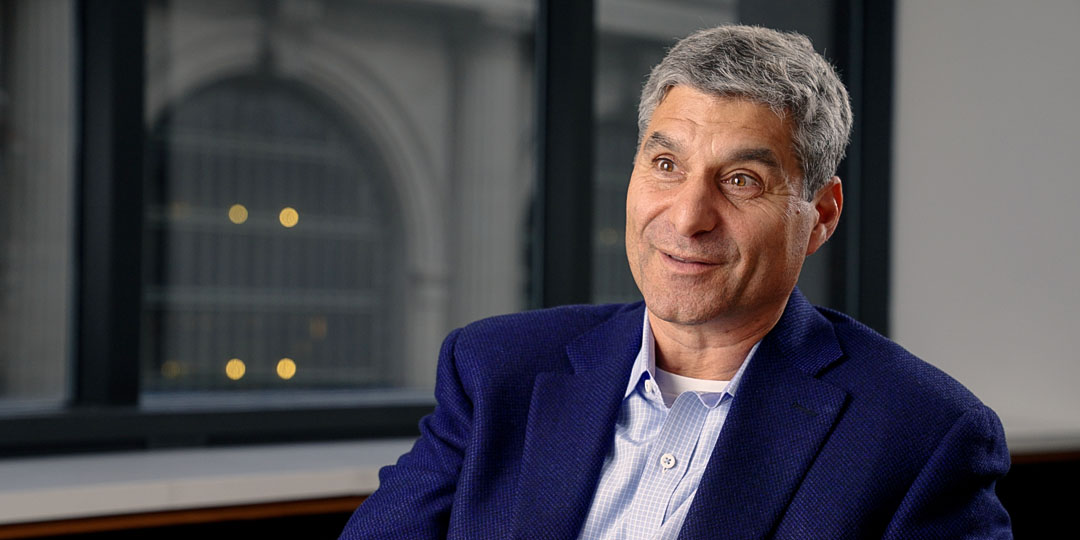
Hear from Peter Troob on TCM's unique lending strategy to small businesses.
Key Takeaways
- Peter Troob, a managing member of Troob Capital Management, discusses their private credit strategy.
- Troob Capital Management noticed a gap in private lending to small businesses. They focus on providing liquidity needs to companies that begin at under $20 million.
- They look for creative investment opportunities and structures, focused on lending against hard assets. By doing this in a less competitive space than many of the larger lenders, they are able to generate high returns with less risk.
Transcript
My name is Peter Troob. I'm the managing member and co-founder of Troob Capital Management. We've been a firm for 20 years investing in everything from distressed to long-short credit to long-short equity to short credit. But our most lucrative investments have always been in the private credit space and the private equity space.
When we sold our business in 2000, we realized, we thought to ourselves that the small businesses would get financed by small banks, local banks, that actually exactly did the opposite. The local bank is now just more or less run away from the small business and small entity need. But they really don't get served by any other players in the marketplace. Most of the larger players don't even want to look at something under 20 million, and most of the smaller players are either unsophisticated or don't come at it with an eye towards building that business.
That's what the firm solely focuses on right now. Providing liquidity needs to companies that begin at under $20 million because that's where the market is pretty inefficient. I can guarantee that no matter how hard we try, we're going to be touching a minuscule fraction of what's out there in the country. There could be a hundred, a thousand, of mes and my firms and we wouldn't run into each other. It's just, there is that much need in the country. Basically, would you say, what do you need? And then we try to structure our investment around that need.
We don't want to stay in a box. It doesn't seem so hard, but I think a lot of investors have sort of gone through the business school process and they're just boxed in. I think it's just about being sort of creative just, you know, getting out of the box of what you have to do and doing what makes sense for the borrower. And so I just think from an investor's standpoint, it's a lucrative sort of fertile ground to make money and do well. But it's hard. It's, you know, it's hard.
For instance, we own airplane parts and landing gear. You can take landing gear and you can lease it. You're effectively taking a hard asset and you've created a bond out of it, so you get paid every month. And then at the end, you sell that airplane part. You can actually exchange, meaning every time an airplane needs landing gear, you can put your landing gear on that airplane, take the old one, and the air carrier will pay you to fix that other one, plus an amount of money to then have it ready for them for another exchange. You can keep doing these exchanges, or you could actually just own the asset and then resell the asset.
So what is that? I mean, that is basically taking a hard asset which you own. You have security interest or you own it and you're actually turning it into a number of different types of assets. Everything from a cash flowing almost bond on an asset to a sale of that asset, where it's like you're buying something at a discount and selling it somewhere between mid-teens and twenty. The type of returns on those types of that specific asset, you have to control your costs.
Remember, there are hidden costs here. You own the asset. You better be insured, right? You have to have storage. These aren't that simple. There's nothing simple. But if you know what you're doing, you contain your costs. And you can do that. By the way, with airplane parts or jewelry or bourbon barrels or raw land like, there's lots of ways to take an asset and create a cash flow stream. A song for that matter, you know, a book. You know, they all have cash flow streams and it's an asset. And as long as you're flexible, you can use it in a lot of ways. So that's what we do on a lot of our investments, not all, but on a lot of our investments.
Important disclosures
Opto Investment Management, LLC (the “Firm”) is a wholly-owned subsidiary of Opto Investments, Inc. and is an SEC-registered investment advisor. Registration with the SEC does not imply a certain level of skill or training. SEC registration does not mean the SEC has approved of the services of the investment adviser. This website is operated and maintained by Opto Investments, Inc. Certain products described herein and institutional relationships may involve investment advisory services provided by the Firm. This website is presented for financial institutions and investment professionals only and is not intended for individual consumers or retail investors, unless specifically noted. Unless otherwise indicated, commentary on this site reflects the personal opinions, viewpoints and analyses of the author and should not be regarded as a description of services provided by the Firm or its affiliates. The opinions expressed here are for general informational purposes only and are not intended to provide specific advice or recommendations for any individual on any security or advisory service. It is only intended to provide education about the financial industry. The views reflected in the commentary are subject to change at any time without notice. While all information presented, including from external, linked or independent sources, is believed to be reliable, we make no representation or warranty as to accuracy or completeness. We reserve the right to change any part of these materials without notice and assume no obligation to provide updates. Nothing on this site constitutes investment advice, performance data or a recommendation that any particular security, portfolio of securities, transaction or investment strategy is suitable for any specific person. We disclaim any responsibility for information, services or products found on linked websites. Images and photographs are included for the sole purpose of visually enhancing the website. None of them show current or former clients and should not be construed as an endorsement or testimonial. All investing is subject to risk, including loss of principal. Historical performance is not a guarantee of future performance and clients may experience different results. This information contains certain “forward-looking statements,” which may be identified by the use of such words as “believe,” “expect,” “anticipate,” “should,” “planned,” “estimated,” “potential” and other similar terms. Examples of forward-looking statements include, but are not limited to, estimates with respect to financial condition, results of operations, and success or lack of success of the depicted investment strategy. All are subject to various factors, including, but not limited to general and local economic conditions, changing levels of competition within certain industries and markets, changes in interest rates, changes in legislation or regulation, and other economic, competitive, governmental, regulatory and technological factors affecting operations that could cause actual results to differ materially from projected results. See related disclosures at https://www.optoinvest.com/disclaimers.