%20(1).png?width=600&height=338&name=menu_thumbnail%20(4)%20(1).png)
%201.svg)


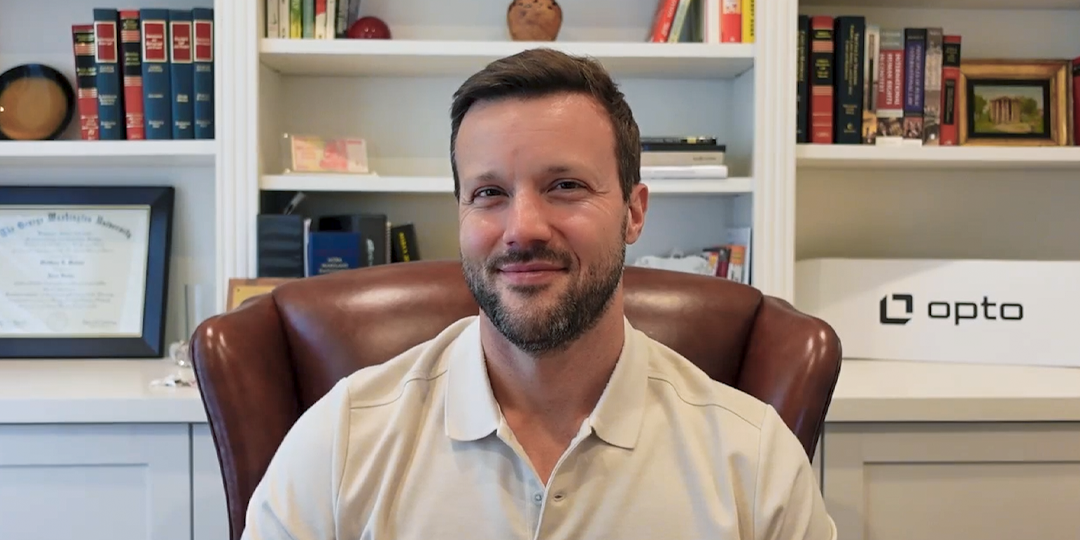
Matt Malone discusses challenges and selective opportunities in the current commercial real estate market
Key Takeaways
- Opportunistic selection and diversification are key in the current commercial real estate market, which has proven challenging to the most sophisticated professional investors.
- Recent parallel losses in US and UK triple-A CMBS tranches, similar to those we saw in the Global FInancial Crisis, highlight some of the vulnerabilities in the commercial real estate market.
Transcript
We get a lot of questions about commercial real estate here. What should we do about it? Should we invest in it? Should we avoid it altogether? What we've been advising clients for a long time is to be selective, be opportunistic, and mainly stay away from core, particularly legacy assets, because there's just a lot less optionality with those. With the changing valuation environment, it's much harder for sponsors to manage through more difficult times with higher interest rates.
Two interesting things have happened recently. We've had parallel losses in triple-A CMBS both in the US and the UK, and this is the first time this has happened since the global financial crisis. A triple-A CMBS tranche is the most highly rated investment grade, supposedly the safest part of a CMBS securitization. CMBS securitizations are basically pools of commercial real estate loans. So, when you look at a pool of commercial real estate loans, the people that are buying the triple-A tranches are getting the least amount of yield because they're taking the least amount of risk. These are the tranches that no one's supposed to lose money on. People did lose money on this. One was a single asset transaction on a New York office, so probably not a lot of surprises there.
This was an office building that was primarily occupied by L Brands. It was bought by Blackstone in 2014 for $600 million. L Brands owns Victoria's Secret and Bath & Body Works. So, not exactly the highest-performing businesses post-Covid. The tenant base was reduced, and the building as office space in New York is not that attractive. It was ultimately recently sold at about a third of the price it was purchased for in 2014. Blackstone's equity was wiped out, and investors experienced loss.
Then in June, not quite the same, but also a loss on a triple-A tranche. This was a 2018 origination, a loan collateralized by a pool of three retail properties in the UK. Oaktree was the original borrower here, another large, sophisticated real estate owner. It's been in default since 2020. This was sold to a cash bidder based on a 60% decline in value. These were secondary malls in the UK, another sector that has been under pressure in real estate and commercial real estate for a while, with lower-quality properties and just lower demand for retail space. On the other hand, this was sold at a current yield of about 15% to the new buyer at a property that has a lot of space to lease up.
So, we've got a New York office that went bad, and we've got UK retail that went bad. Both equity owners were wiped out, and both properties were picked up by opportunistic buyers. I think what this teaches us about investing in commercial real estate now is diversification. Even the big guys, these were Blackstone and Oaktree deals, are having problems. Avoid troubled asset classes if you can. Every bad deal on one side is potentially an opportunistic deal on the other side. So, it's a time to be selective and opportunistic in commercial real estate.
Important disclosures
Opto Investment Management, LLC (the “Firm”) is a wholly-owned subsidiary of Opto Investments, Inc. and is an SEC-registered investment advisor. Registration with the SEC does not imply a certain level of skill or training. SEC registration does not mean the SEC has approved of the services of the investment adviser. This website is operated and maintained by Opto Investments, Inc. Certain products described herein and institutional relationships may involve investment advisory services provided by the Firm. This website is presented for financial institutions and investment professionals only and is not intended for individual consumers or retail investors, unless specifically noted. Unless otherwise indicated, commentary on this site reflects the personal opinions, viewpoints and analyses of the author and should not be regarded as a description of services provided by the Firm or its affiliates. The opinions expressed here are for general informational purposes only and are not intended to provide specific advice or recommendations for any individual on any security or advisory service. It is only intended to provide education about the financial industry. The views reflected in the commentary are subject to change at any time without notice. While all information presented, including from external, linked or independent sources, is believed to be reliable, we make no representation or warranty as to accuracy or completeness. We reserve the right to change any part of these materials without notice and assume no obligation to provide updates. Nothing on this site constitutes investment advice, performance data or a recommendation that any particular security, portfolio of securities, transaction or investment strategy is suitable for any specific person. We disclaim any responsibility for information, services or products found on linked websites. Images and photographs are included for the sole purpose of visually enhancing the website. None of them show current or former clients and should not be construed as an endorsement or testimonial. All investing is subject to risk, including loss of principal. Historical performance is not a guarantee of future performance and clients may experience different results. This information contains certain “forward-looking statements,” which may be identified by the use of such words as “believe,” “expect,” “anticipate,” “should,” “planned,” “estimated,” “potential” and other similar terms. Examples of forward-looking statements include, but are not limited to, estimates with respect to financial condition, results of operations, and success or lack of success of the depicted investment strategy. All are subject to various factors, including, but not limited to general and local economic conditions, changing levels of competition within certain industries and markets, changes in interest rates, changes in legislation or regulation, and other economic, competitive, governmental, regulatory and technological factors affecting operations that could cause actual results to differ materially from projected results. See related disclosures at https://www.optoinvest.com/disclaimers.